
The “Wealth Tax” Exodus
Imagine getting a call from your accountant in late December with a simple, terrifying instruction: “Move your assets now, or lose 5% of everything.”
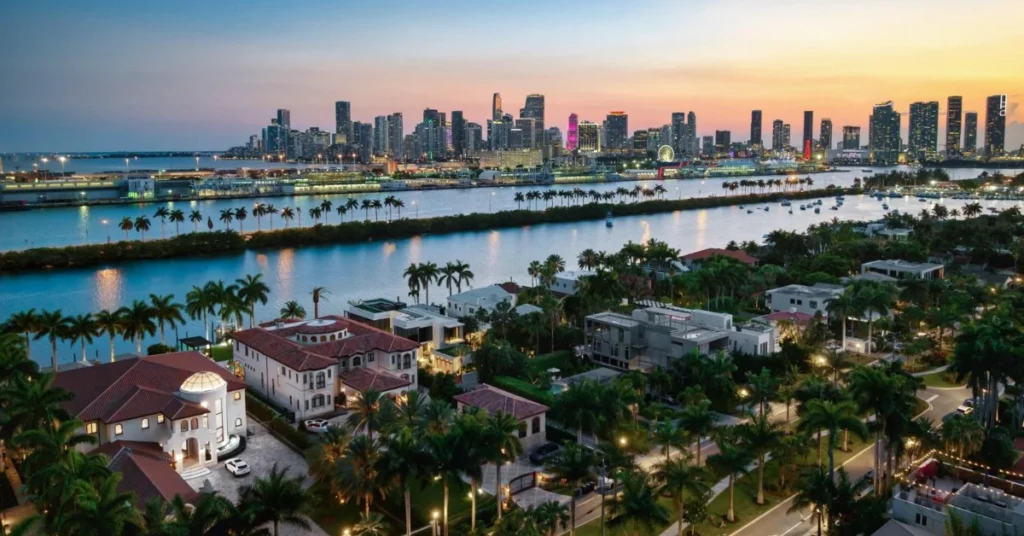
For many of California’s ultra-high-net-worth individuals (UHNWIs), this wasn’t a hypothetical scenario—it was the reality of late 2025. The Miami real estate market witnessed something unprecedented during the holiday season: a scramble of billionaires flying in from Silicon Valley, touring properties, and closing deals within seven days. This wasn’t just about sunshine or beaches anymore. It was an “emergency” migration driven by a fiscal deadline that has fundamentally changed the landscape of American wealth.
Welcome to the “Wealth Tax” Exodus. In 2026, Miami has officially transitioned from a seasonal vacation spot to a “politically safe harbor” for capital. If you’ve noticed a shift in the luxury market—more all-cash offers, higher demands for security, and a sudden obsession with “turnkey” properties—you aren’t imagining it. The West Coast is moving in, and they are rewriting the rules of Miami real estate.
The “Tipping Point”: California’s 2026 Wealth Tax Proposal
The primary catalyst for this sudden surge isn’t just high income tax—it’s the threat of a wealth tax. In late 2025, a proposal gained significant traction in California to impose a one-time 5% tax on residents with a net worth exceeding $1 billion.
What made this proposal truly terrifying for the wealthy wasn’t just the rate, but the timeline. The policy targeted anyone who was a California resident as of January 1, 2026. This created a hard temporal boundary. If you were still a resident on New Year’s Day, you could be on the hook for millions—or in some cases, billions—of dollars in new taxes.
This created a “tipping point”. Real estate brokers reported clients flying into Miami with a singular mission: satisfy the 183-day residency requirement for the 2026 tax year immediately. Unlike the pandemic-era buyers who sought space and safety from a virus, the 2026 buyer is a “tax-refugee billionaire” seeking safety from legislative overreach.
While California effectively punishes wealth accumulation, Florida offers a starkly different fiscal landscape:
- State Income Tax: 0%
- Wealth Tax: 0%
- Estate Tax: 0%
For a billionaire, the math is simple. The premium paid for a “trophy” asset in Miami is often entirely offset by the tax savings in a single year.
The Larry Page Effect: A $173 Million Vote of Confidence
If the tax laws provided the push, Google co-founder Larry Page provided the pull. In early January 2026, Page made headlines by acquiring two adjacent waterfront estates in Coconut Grove for a combined $173.4 million. (read WSJ article)
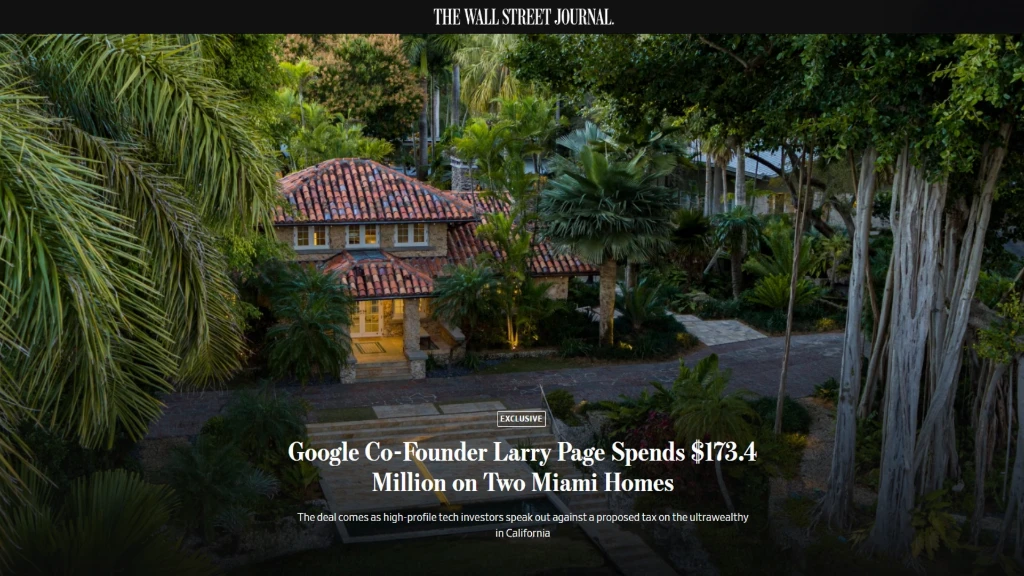
This wasn’t just a real estate transaction; it was a “confirmation moment” for the entire tech industry. Page acquired a 4.5-acre estate (formerly the Lewis Estate) for $101.5 million and a neighboring 17,000-square-foot home for $71.9 million.
Why does this matter? Because ultra-wealthy buyers rarely move alone. They move in herds, driven by peer validation. Page’s decision to plant a flag in Coconut Grove rather than the more ostentatious Star Island signaled a shift in cultural values. The West Coast tech elite prefers “discreet wealth,” historic canopies, and privacy over “new-money glitz”.
Following Page’s purchase, search queries for “Camp Biscayne off-market” and “Coconut Grove gated estates” spiked by 40% among California IP addresses. The “Page Effect” has essentially stamped Miami as the new headquarters for the tech elite.
Beyond Taxes: The Rise of the “Operational Fortress”
The California buyer isn’t looking for a project; they are looking for a fortress. In 2026, the definition of luxury has evolved from aesthetic beauty to “operational excellence”.
Data from search trends reveals a sophisticated new vocabulary. Buyers are no longer just searching for “waterfront homes.” They are filtering for:
- “Lock-and-Leave” Capability: For the 13,200+ UHNWIs with global portfolios, a home must be secure and low-maintenance when they aren’t there.
- Enterprise-Level Security: We aren’t talking about a Ring doorbell. These buyers want “discreet arrival protocols,” underground valet access, and cloud-managed security systems that allow them to audit staff entry remotely.
- Resilient Infrastructure: Reflecting a “Palo Alto mindset,” there is high demand for “biophilic luxury design” and impact-rated glass that can withstand extreme weather.
The modern Miami mansion is viewed as an “Operational Fortress”. It must provide fiscal defense (tax savings), physical defense (security), and environmental defense (resilience). If a property can’t guarantee “uptime” like a software platform, these buyers aren’t interested.
Where They Are Buying: The Top Neighborhoods for California Transplants
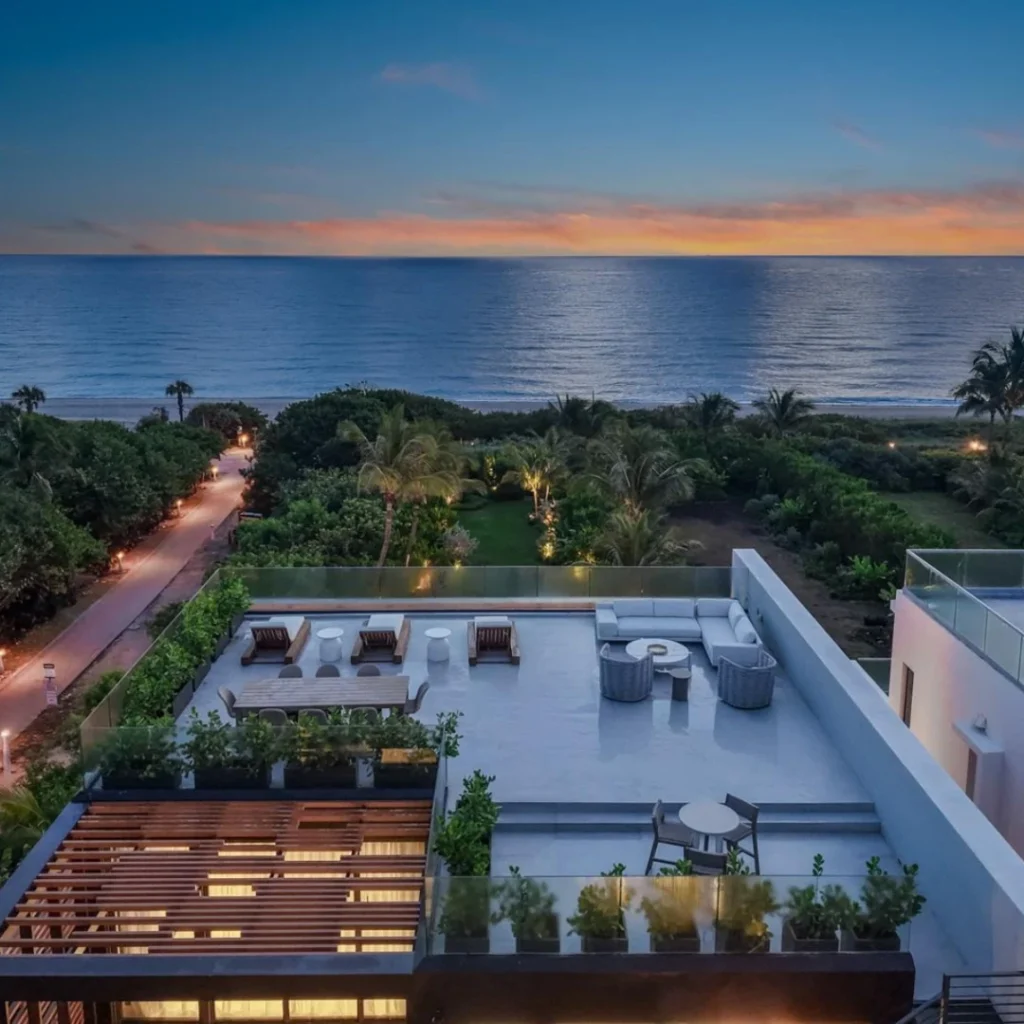
The California migration isn’t spreading evenly across Miami. It is highly concentrated in specific “micro-markets” that offer the right blend of logistics, privacy, and lifestyle.
1. Coconut Grove: The “Soulful” Sanctuary
As evidenced by Larry Page, Coconut Grove is the top choice for families. It offers a “bohemian-chic” aesthetic, mature landscapes, and arguably the most important asset for relocating families: proximity to elite private schools like Ransom Everglades and Carrollton. The vibe here is “insulation without isolation”—you are in a village, but hidden away.
2. Fisher Island: The Ultimate Prize
For those seeking absolute exclusion, Fisher Island remains undefeated. Accessible only by private ferry or yacht, it offers a “no-public-access” guarantee that is structurally scarce in Florida. It is the preferred landing spot for buyers who want their neighborhood to function like a private club.
3. Coral Gables: The “City Beautiful”
Buyers looking for “legacy” estates often land in Coral Gables. With its historic Mediterranean Revival architecture and dedicated police force, it appeals to those seeking safety and long-term appreciation. The “East of US-1” and “Gables Estates” searches are dominating this sector.
4. Brickell: The Manhattan of the South
Younger tech founders and fintech professionals who crave energy are flocking to Brickell. They are buying “branded residences” (like Cipriani or Waldorf Astoria) that offer five-star hotel services, effectively eliminating the need for household management.
Cash is King: The Speed of the 2026 Market
If you are a seller in this market, you need to understand the new speed of business. The days of 60-day closings dependent on mortgage underwriting are fading in the luxury tier.
In December 2025, 81% of sales in the $10 million-plus tier were all-cash transactions. Why? Because speed is the ultimate currency for the tax refugee. Cash allows buyers to bypass the friction of traditional lending and close in as little as seven days to beat residency deadlines.
This influx of liquidity has decoupled the ultra-luxury market from the broader economy. While high interest rates might slow down the mid-market, the high-end sector is fueled by mobile capital that doesn’t need a bank’s permission to move.
Lifestyle Logistics: Schools and Wellness
Finally, the decision to move to Miami is often “education-first”. The arrival of Avenues: The World School has been a game-changer, giving Miami an educational institution that mirrors the elite standards of New York and San Francisco.
We are seeing a surge in searches for homes within a “15-minute school commute” of Ransom Everglades or Avenues. For the California buyer, time is their most valuable asset. A home that requires a 45-minute drive to school is a non-starter, no matter how beautiful the view is.
Furthermore, wellness is no longer an “extra.” It is baseline infrastructure. Buyers are demanding medical-grade amenities—cold plunges, infrared saunas, and air filtration systems that rival hospital standards. They want their home to be a “biological stabilizer” that actively contributes to their health.
Conclusion: Miami is the New Capital of Mobile Wealth
The narrative that Miami is just a “COVID boomtown” is officially dead. The events of late 2025 and early 2026 prove that this is a structural realignment of American wealth.
The California buyer isn’t just buying a house; they are buying a new operating system for their life—one with lower taxes, higher security, and a lifestyle that prioritizes freedom and family. As we look ahead to the rest of 2026, the question isn’t whether prices will hold, but rather: is there enough inventory to satisfy the demand?
If you are considering making the move, or if you are looking to sell your property to this new wave of qualified buyers, you need a strategy that matches the sophistication of the market.
Ready to Secure Your Piece of the “Magic City”?
The market is moving at the speed of cash. Whether you are looking for a Waterfront Home in Miami Beach or a private estate or condo in the Most Secure neighborhoods in Miami, you need a team that understands the nuances of the 2026 landscape.
📞 Connect with David Nguah
Director of Luxury Sales · Douglas Elliman
26 Years of Miami Beach Real Estate Experience
📞 Call David: 786-200-3966 | 💬 WhatsApp David
Let’s schedule a private tour or strategy call—your Miami Beach move starts here.