Real Estate Business

No Comments

Miami Beach Mega Penthouses: Inside the $78M Apogee and $37M Perigon Listings

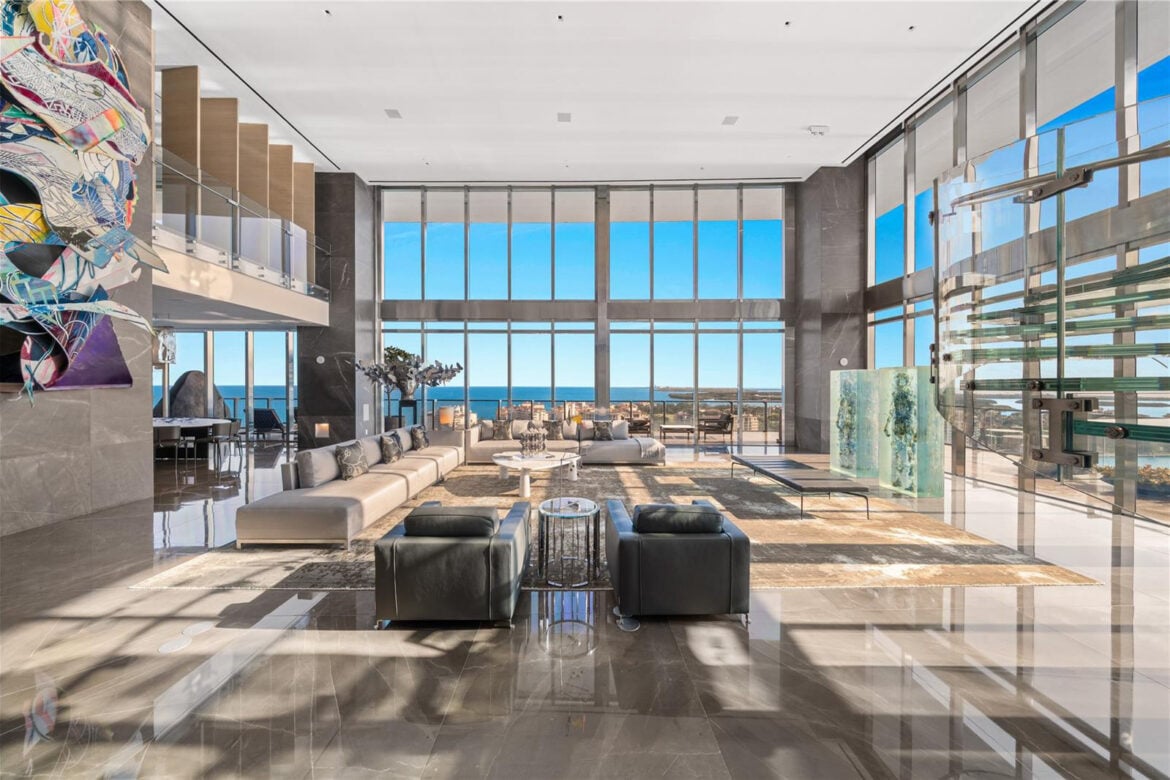
Apogee Penthouse interior South Beach Miami double-height ceilings ocean views glass staircase

There are penthouses, and then there are penthouses. The kind that redefine what it means to live at the top — literally and figuratively. In 2026, two Miami Beach residences stand apart from every other listing on the market: the $78 million Apogee Penthouse in South of Fifth, and the $37 million Penthouse West at The Perigon on Mid-Beach.

These are not speculative renderings or early-stage promises. One is a fully realized, design-complete trophy in the most exclusive neighborhood on Miami Beach. The other is a brand-new creation from a Pritzker Prize-winning architect, delivering in 2027. Together, they represent the two distinct paths to penthouse living that serious buyers are evaluating right now.

The Apogee Penthouse: $78 Million — South of Fifth’s Crown Jewel

At 800 South Pointe Drive, the Apogee has been the benchmark for boutique luxury on Miami Beach since it was completed in 2008. Developed by Jorge Perez’s Related Group, designed by Sieger Suarez Architects, and with common areas appointed by internationally acclaimed design firm Yabu Pushelberg, Apogee contains just 67 residences across 22 stories. It is not a tower you stumble into. It is one you earn your way into.

The penthouse listing at $78 million is a corner tri-level spanning over 21,000 total square feet — approximately 9,049 square feet of interior living space and more than 13,000 square feet of private outdoor space. Designed by PH Design Studio, the residence was conceived as a single-family estate in the sky.
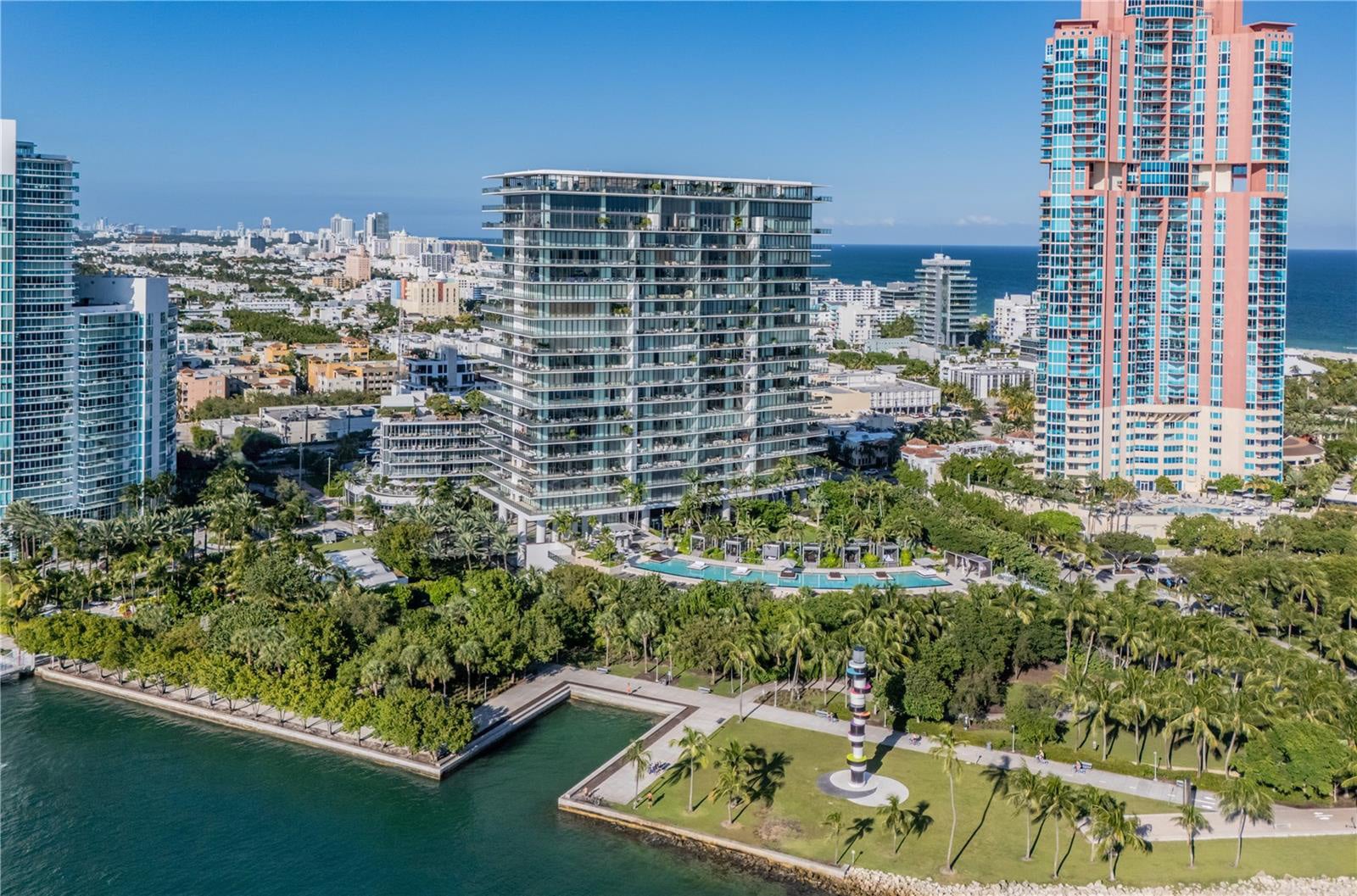
Apogee South Beach luxury condominium building exterior in the South of Fifth neighborhood of Miami Beach
Apogee South Beach — the iconic oceanfront tower in South of Fifth. Image: MLS / Luxe Living Realty
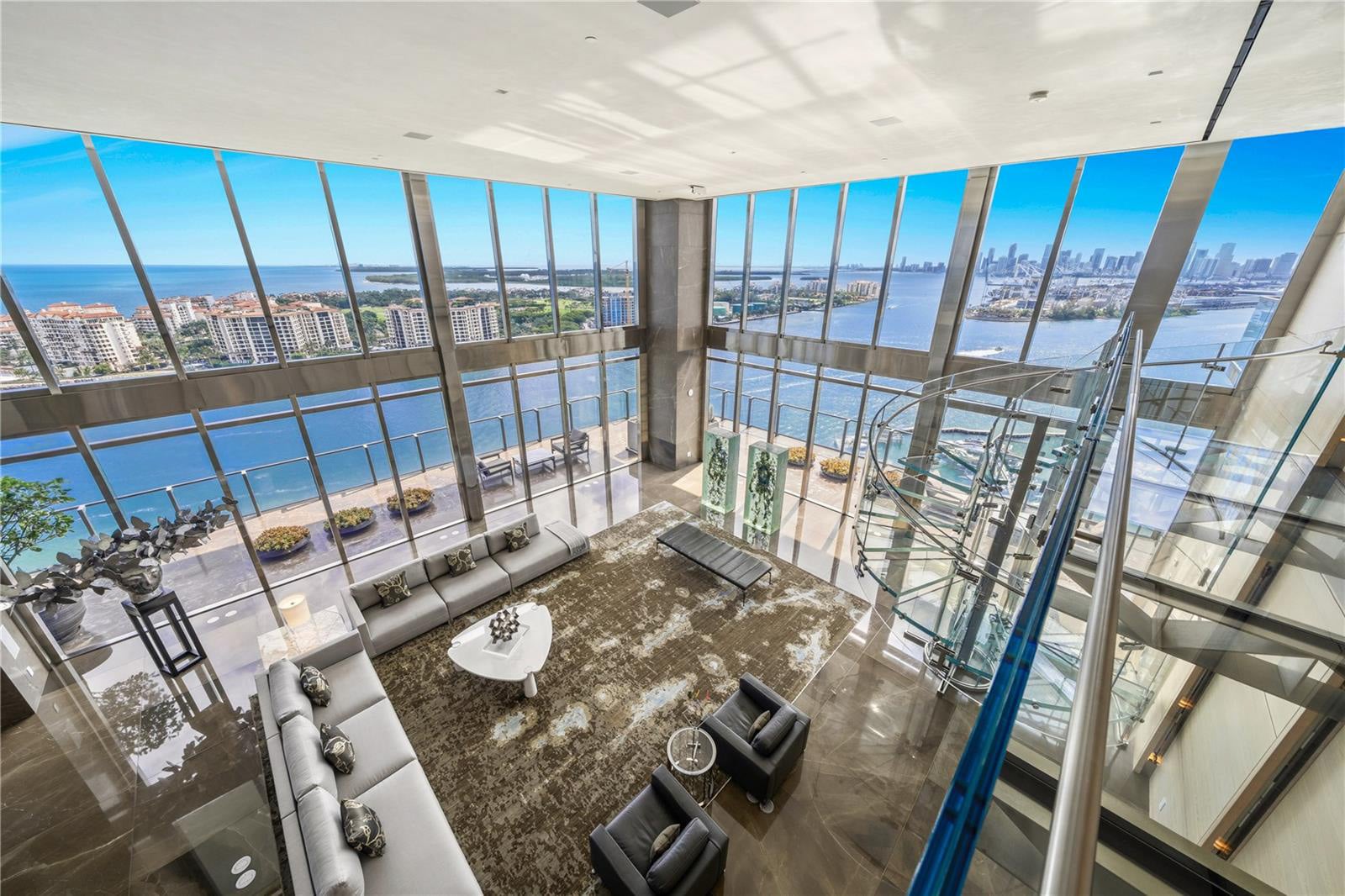
Interior of the Apogee South Beach penthouse residence with luxury finishes and ocean views
The Apogee Penthouse — over 9,000 square feet of interior living space designed as a single-family estate in the sky. Image: MLS / Luxe Living Realty

What Makes This Penthouse Exceptional

Five bedrooms and seven bathrooms are distributed across three full floors connected by a sculptural Faour glass staircase and a private interior elevator. The main level features soaring 24-foot double-height ceilings with panoramic views of the Atlantic Ocean, Biscayne Bay, Government Cut, and the downtown Miami skyline.

The private rooftop is where this penthouse moves from extraordinary to unrepeatable. At over 7,000 square feet, it includes a heated pool and spa, a full cabana suite with sauna, a Gaudi marble waterfall with dining for 22 guests, a fully equipped stainless steel summer kitchen, and a private outdoor theater with surround sound. This is the kind of rooftop that would be the centerpiece amenity of an entire building elsewhere — here, it belongs to one residence.

The chef’s kitchen is outfitted with Miele appliances, complemented by a separate service kitchen and prep area with staff bath. The primary suite includes a private library with an integrated moving bookcase that reveals a concealed entrance to the bedroom — a detail that speaks to the level of design thinking at work here. The primary bath is wrapped in light American ash wood and Gaudi marble, with laser-sculptured stone art walls and an outdoor shower.

Building amenities at Apogee include a resort-style pool with poolside cabanas, full-service concierge, 24-hour valet, spa, fitness center, and what the building describes as presidential-level security. The penthouse itself comes with an air-conditioned 2.5-car garage and temperature-controlled wine storage.
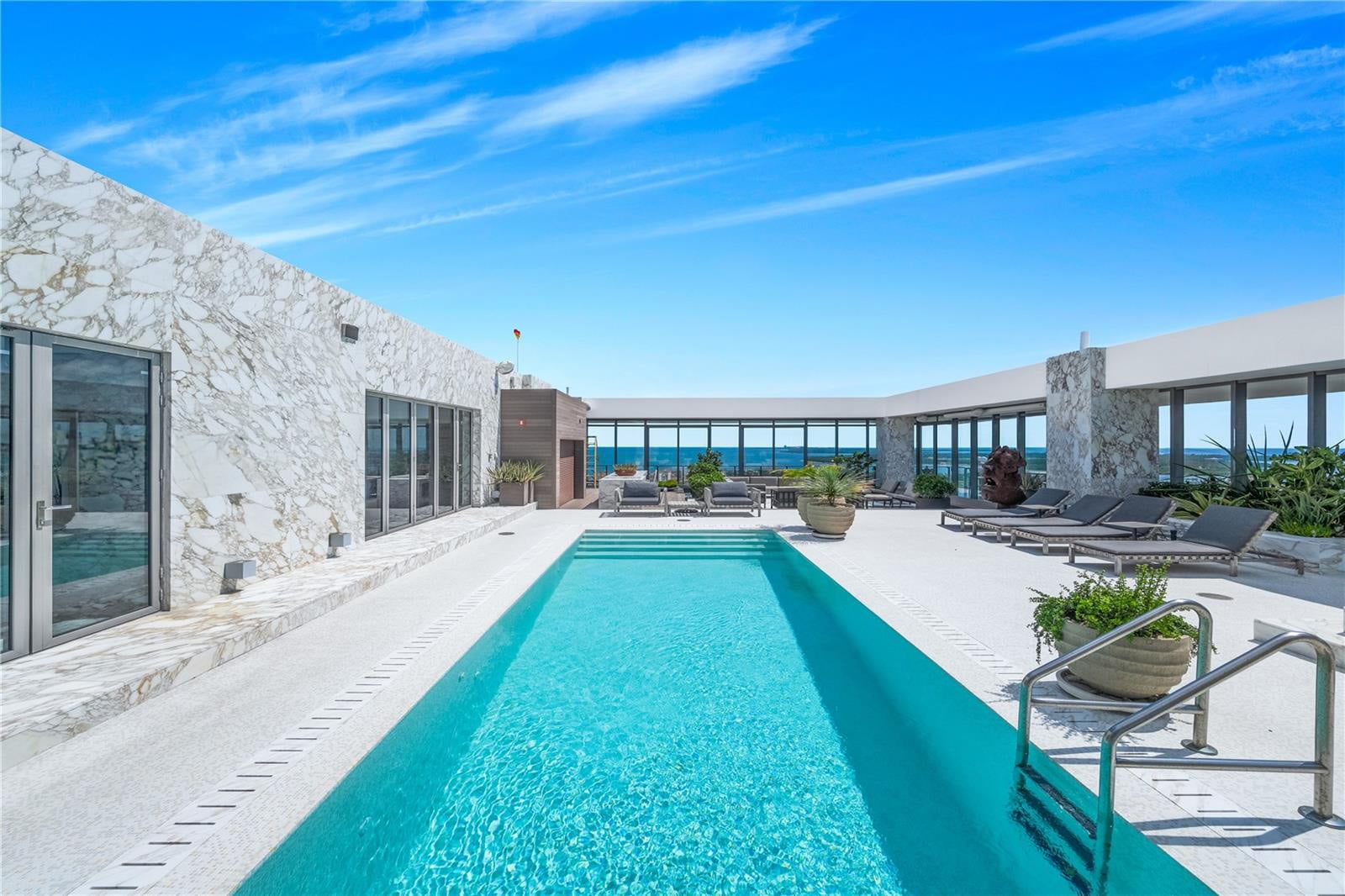
Apogee Penthouse private rooftop pool South of Fifth Miami Beach with ocean views
The Apogee Penthouse’s private rooftop — pool, spa, outdoor theater, and dining for 22. Photo: MLS / Luxe Living Realty

The South of Fifth Factor

Location is what separates a very expensive penthouse from an irreplaceable one. South of Fifth — known locally as SoFi — occupies the southernmost tip of Miami Beach, surrounded on three sides by water. Restrictive zoning means no meaningful new high-rise development is possible here, ever. Every existing residence in a building like Apogee is, by definition, permanently scarce.

SoFi is walkable, quiet relative to the rest of South Beach, and home to more than 20 acclaimed restaurants. South Pointe Park and its iconic pier sit steps from the Apogee’s entrance. For buyers who want to own the best of what already exists in Miami Beach, this is where the conversation begins — and often ends.

Penthouse West at The Perigon: $37 Million — A New Standard on Mid-Beach

Five miles north on Collins Avenue, an entirely different proposition is taking shape. The Perigon at 5333 Collins Avenue is a collaboration between three forces that have never before converged on a single Miami Beach project: MAST Capital and Starwood Capital Group as developers, Rem Koolhaas and OMA (Office for Metropolitan Architecture) as the building architect, and Tara Bernerd & Partners handling interior design.
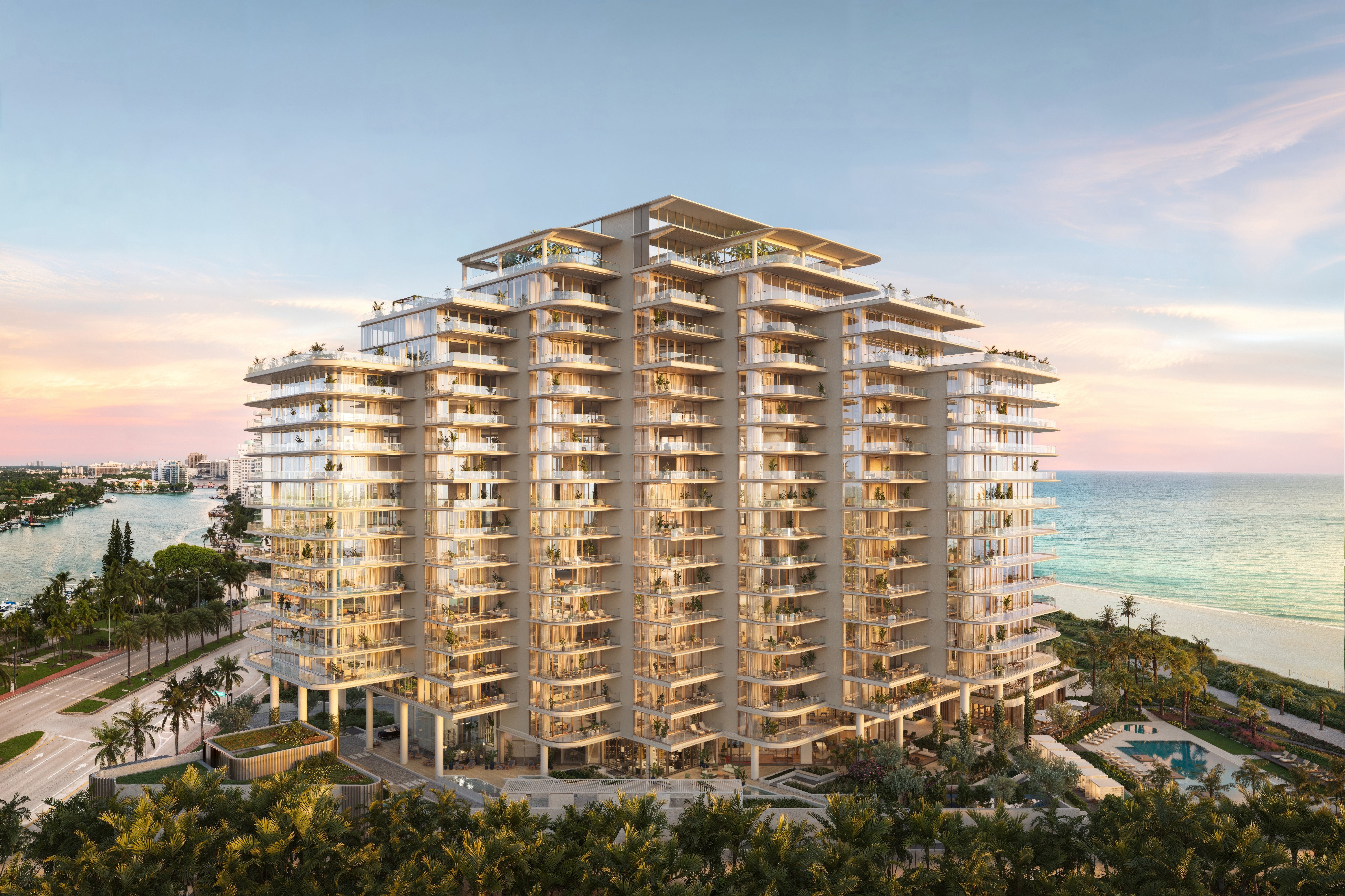
The Perigon Miami Beach exterior rendering at 5333 Collins Avenue designed by Rem Koolhaas OMA
The Perigon at 5333 Collins Avenue — designed by Rem Koolhaas and OMA, Miami Beach’s first Pritzker Prize-winning residential project.

This is OMA’s first residential project on Miami Beach — a distinction that matters. Rem Koolhaas is a Pritzker Prize laureate whose body of work includes the Seattle Central Library, CCTV Headquarters in Beijing, and the Fondazione Prada in Milan. His involvement signals that The Perigon is not another luxury condo tower. It is an architectural statement.

The 17-story oceanfront tower will contain just 73 residences plus eight private guest suites available exclusively to owners. Penthouse West is a two-level residence offering 5,685 square feet of interior living space and an additional 6,487 square feet of private terraces — over 12,000 total square feet of living.
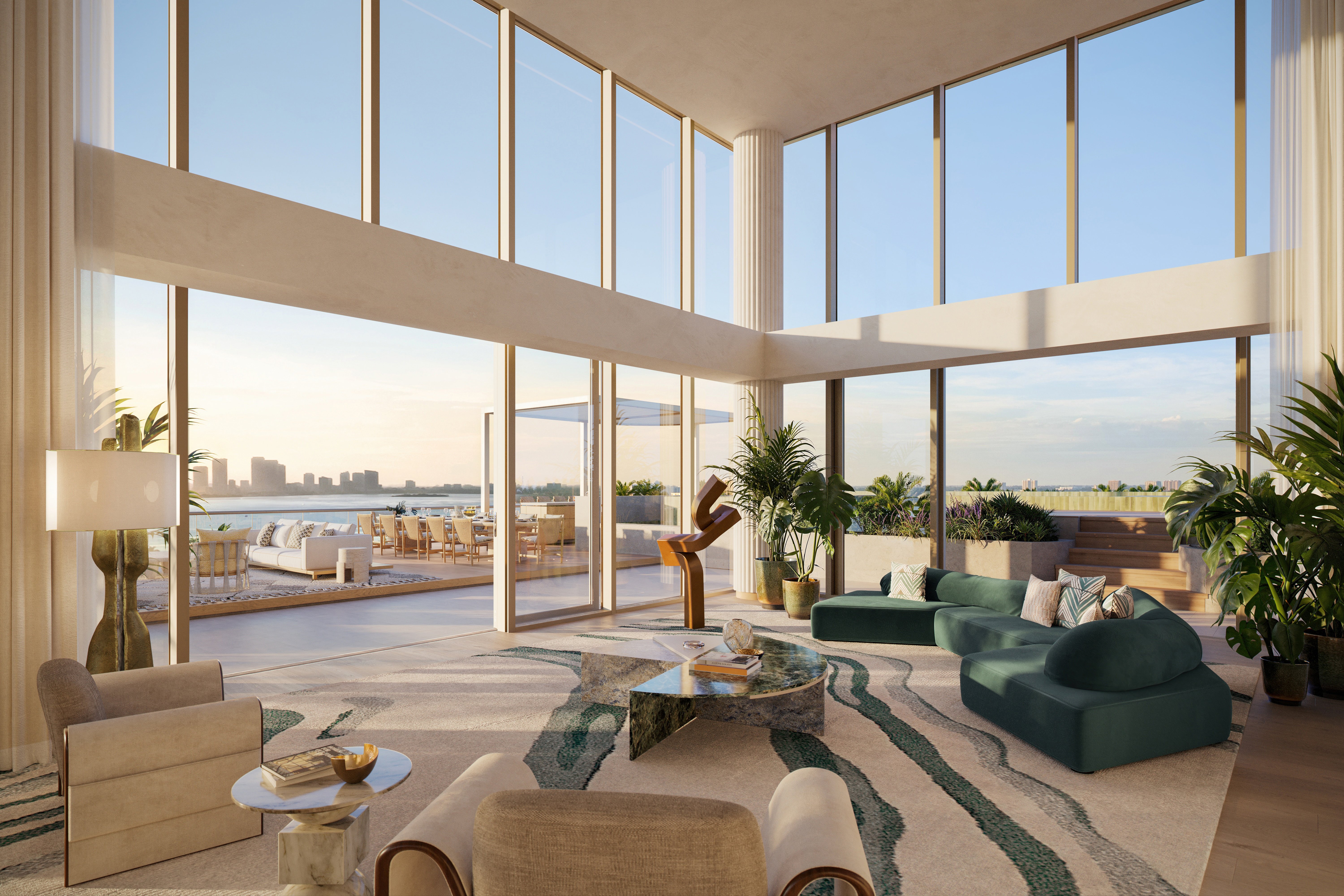
Perigon Penthouse West Miami Beach great room interior rendering with panoramic ocean views
Penthouse West great room at The Perigon — 5,685 square feet of interior living with ocean and bay views.

What Penthouse West Delivers

Four bedrooms and seven bathrooms across two levels, with panoramic views spanning the Atlantic Ocean, Biscayne Bay, and the Intracoastal Waterway. As developer inventory, the buyer selects kitchen cabinetry, flooring, and closet finishes — a level of personalization rarely available at this price point. The kitchen comes pre-specified with Wolf and Sub-Zero appliances, gas cooking, and stone countertops.

The building’s amenities are calibrated for residents who expect hotel-level service without hotel-level crowds. Nearly 40,000 square feet of amenity space includes a resident-only restaurant helmed by Michelin-starred Chef Shaun Hergatt, residential butler service, a curated house car program, full valet, spa, fitness center, and pool. The Perigon has also achieved LEED Gold certification — an increasingly relevant consideration for institutional-quality buyers evaluating long-term asset value.

Three garage spaces are included, with the option of self-parking or valet — a small detail that reveals how thoughtfully this building treats ownership autonomy.
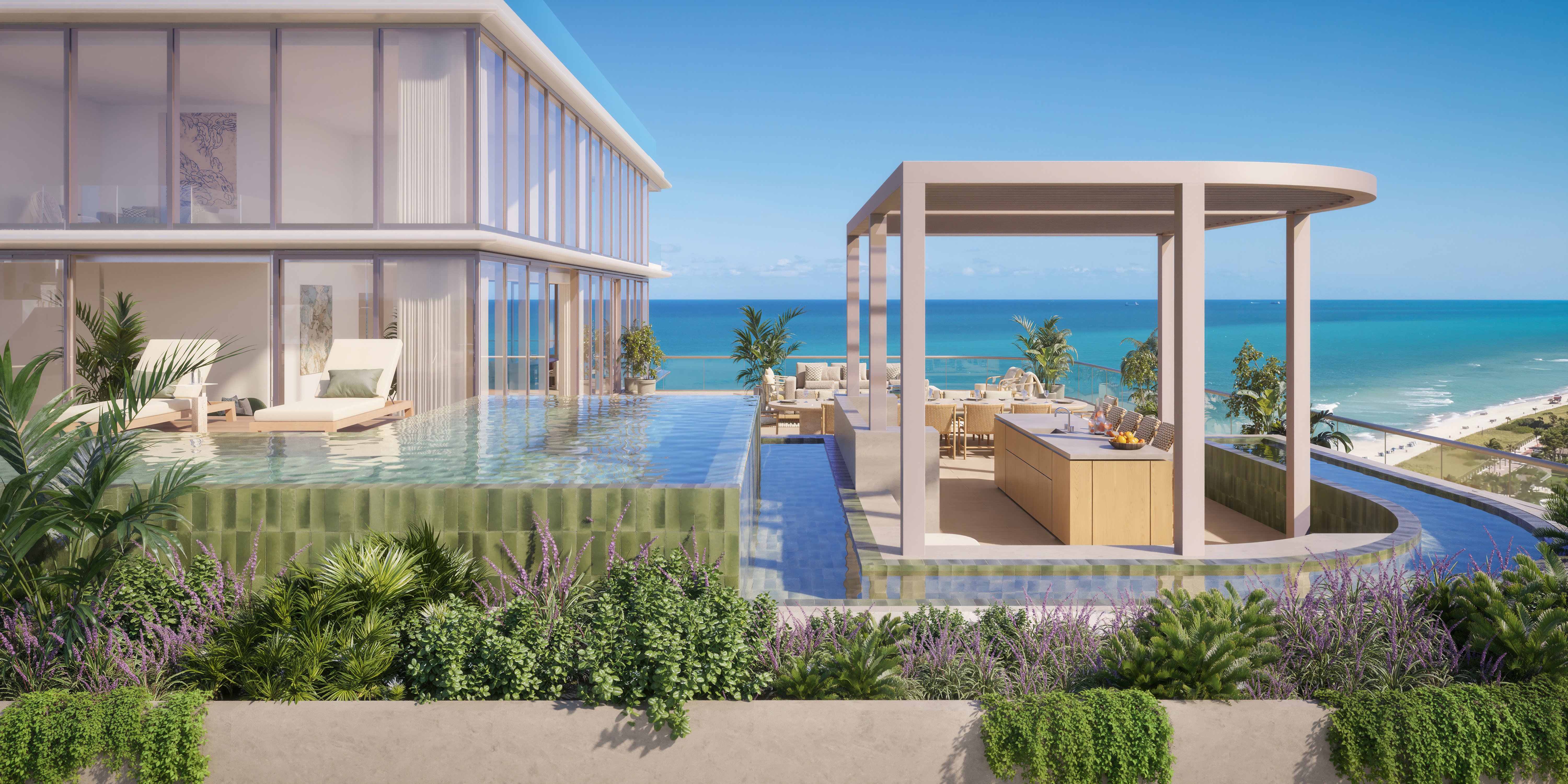
Perigon Penthouse West Miami Beach private rooftop pool terrace with ocean views
Private rooftop pool and terrace at Penthouse West — over 6,400 square feet of outdoor space.

Why Mid-Beach, Why Now

Mid-Beach is experiencing a renaissance. Positioned between the energy of South Beach and the established wealth of Bal Harbour, this stretch of Collins Avenue offers wider beaches, lower density, and a sense of space that South of Fifth simply cannot replicate. The Perigon joins a tier that includes the Faena House, the Edition Residences, and the Surf Club Four Seasons — buildings that have collectively repositioned Mid-Beach as a peer to any luxury enclave in the world.

For buyers who want to shape a residence from the ground up — choosing finishes, influencing layout details, and owning something that has never been lived in — The Perigon represents an opportunity that the secondary market in SoFi does not offer.

Apogee PenthousePerigon Penthouse W
Price$78,000,000$37,000,000
Interior9,049 SF5,485 SF
Total living21,000+ SF12,000+ SF
Beds / Baths5 BD / 7 BA4 BD / 5.5 BA
BuildingApogee (2008)The Perigon (2027)
ArchitectSieger SuarezRem Koolhaas / OMA
LocationSouth of FifthMid-Beach
StatusResalePre-construction

Listing prices sourced from MLS and are subject to change without notice. Contact David for current pricing and availability.

Two Penthouses, Two Philosophies

These two listings frame the central question every ultra-luxury buyer faces: do you want the finished masterpiece, or do you want to commission one?

The Apogee penthouse is the finished masterpiece. Every surface, every system, every sight line has been resolved. You walk in, and it is done — at a level that took years and millions in design fees to achieve. The tri-level format, the private rooftop, the South of Fifth address: none of this can be replicated, because the zoning and the building itself will never allow it again. At $78 million, you are paying for scarcity, provenance, and a residence that functions as a private estate within a 67-unit building.

Penthouse West at The Perigon is the commission. You are buying architecture by Rem Koolhaas, interiors by Tara Bernerd, and the ability to personalize a brand-new residence with the finishes you select. At $37 million, the value proposition is materially different: nearly the same total square footage, new construction, a Michelin-starred restaurant in the building, and an oceanfront position on Mid-Beach’s widest stretch of sand. What you are exchanging is the SoFi address and the fully-realized design for new construction pedigree and customization.

The Miami Beach Penthouse Market in 2026

Context matters. In late 2025, a penthouse at the Surf Club Four Seasons closed at $86 million — setting a new Miami-Dade County condo sales record and surpassing the $60 million Faena House benchmark that had stood since 2015. Price per square foot in prime Miami Beach luxury has now established a floor above $1,000.

Industry analysts are calling 2026 the year of the penthouse, with active listings ranging from $30 million to well over $150 million across Miami Beach, Bal Harbour, and the new developments rising along Biscayne Bay. The buyers driving this market are not speculating. They are relocating wealth — from the Northeast, from Latin America, from Europe — and they are seeking residences that serve as both primary homes and generational assets.

Both the Apogee and The Perigon sit squarely within this wave. They are priced at levels the market has validated, in buildings and locations that justify the ask.

Which Penthouse Is Right for You?

If you are evaluating either of these residences — or if you want to understand how they compare to other trophy penthouses currently available on Miami Beach — I am happy to share what I am seeing in this market. These are the kinds of properties where access, timing, and local insight make a measurable difference.

David Nguah Group luxury real estate logo
Douglas Elliman Real Estate logo
David Nguah
Luxury Real Estate Advisor
Considering a trophy penthouse on Miami Beach? Happy to share current availability and off-market opportunities.
(786) 200-3966
Exploring other options?
Browse All Miami Beach Penthouses
No Comments

Fisher Island Fuel Depot Battle: What the $400M Eminent Domain Fight Means for Buyers in 2026

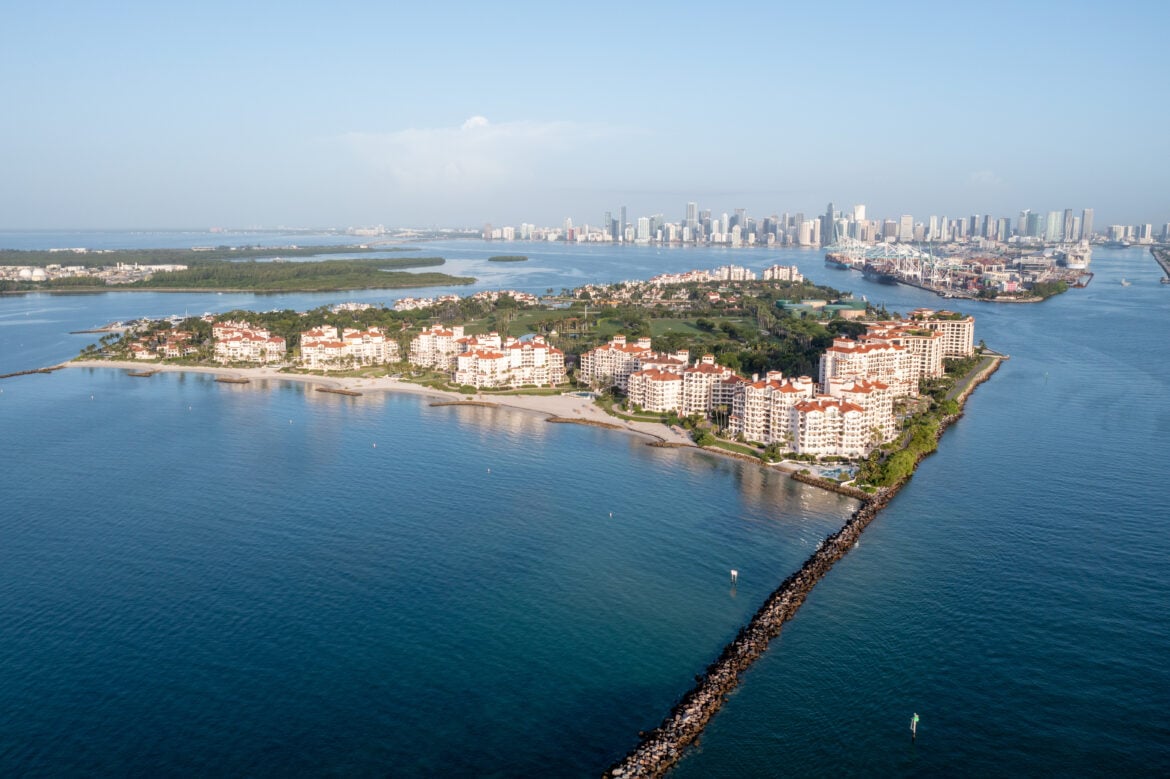
Aerial view of Fisher Island Miami at sunrise with downtown Miami skyline across Biscayne Bay

Fisher Island — the ultra-exclusive enclave accessible only by ferry, where the average household income exceeds $2 million — is now at the center of one of South Florida’s most consequential real estate battles. On June 16, 2026, Miami-Dade County commissioners voted to pursue eminent domain proceedings to acquire a 9.6-acre fuel depot site on Fisher Island, escalating a months-long dispute that has drawn in billionaire residents, powerful developers, and county officials.

For luxury buyers considering Fisher Island or the broader Miami waterfront market, this fight carries real implications for property values, development timelines, and the future character of one of America’s wealthiest zip codes. Here is what you need to know.

In This Article

What Happened: The $400M Land Deal That Fell Apart

In October 2025, Chicago-based HRP Group purchased a 9.6-acre fuel depot on Fisher Island for $180 million. The site, located at the southern tip of the island, had served as a fueling station for PortMiami vessels for decades. When HRP acquired the property, they simultaneously signed two agreements with the Fisher Island community:

  • A development agreement committing HRP to demolish the fuel depot, remediate the land, and build luxury condominiums on the site
  • An option agreement requiring HRP to convey approximately 4 acres to the Fisher Island Community Association for community use

Fisher Island residents celebrated the deal. After years of living adjacent to an aging fuel storage facility — with its environmental risks and industrial character — the promise of a remediated site and new luxury residences seemed like a win for everyone.

But in early 2026, the deal began to unravel. Reports emerged that HRP had been in quiet negotiations with Miami-Dade County over a seven-month period to sell the entire property to the county for a staggering $400 million — $200 million at closing, plus another $200 million over 20 years. The county wanted the site to relocate its port fueling operations, which would mean the fuel depot would remain — not be demolished as promised.

Miami-Dade’s Eminent Domain Move

When the proposed $400 million deal collapsed under public scrutiny, Miami-Dade did not back down. On June 16, 2026, county commissioners voted to pursue acquiring the Fisher Island fuel depot site through eminent domain — the government’s power to take private property for public use with compensation.

The Fisher Island Community Association and the Fisher Island Club have both filed lawsuits to block the county’s actions. Their legal arguments center on several points:

  • The fuel depot poses safety risks to the approximately 800 families living on Fisher Island
  • HRP’s original development agreement should be honored
  • The county’s interest in the property is driven by a desire to avoid more expensive alternatives for port fueling infrastructure

According to The Real Deal, the community association’s lawsuit described the fuel depot as creating “perpetual danger” for Fisher Island families. The legal battle is expected to be protracted, with implications that could stretch well into 2027.

How This Affects Fisher Island Property Values

Fisher Island has long been one of the most expensive residential addresses in the United States. Current listings on Fisher Island range from $3 million condominiums to $50 million-plus estates. The median sale price has consistently exceeded $5 million in recent years.

Fisher Island Miami aerial view of luxury mansion estates - property values affected by eminent domain fuel depot dispute 2026
Fisher Island luxury estates. Properties near the fuel depot site face the most buyer scrutiny during the eminent domain proceedings.

The eminent domain battle introduces uncertainty into this market in several ways:

  • Environmental concerns: If the fuel depot remains operational, buyers must factor in proximity to an industrial fuel storage facility, environmental liability exposure, and potential impacts on insurance premiums
  • Development potential lost: The HRP development plan would have added ultra-luxury inventory to Fisher Island — potentially driving up comparable values across the island. Without it, the island’s development pipeline shrinks
  • Legal uncertainty: Eminent domain proceedings can take years. During that time, the 9.6-acre site sits in limbo — neither developed nor remediated
  • Buyer confidence: High-net-worth buyers value stability and predictability. An active government land-seizure proceeding on the island introduces a variable that sophisticated buyers will want to understand before committing

That said, Fisher Island’s fundamentals remain strong. The island’s exclusivity, limited inventory, and world-class amenities continue to attract ultra-high-net-worth buyers from around the globe. Existing properties far from the fuel depot site may see minimal impact, while units closer to the southern tip could face more scrutiny from buyers and their advisors.

The Luxury Condo Development That Hangs in the Balance

HRP Group’s original plan for the fuel depot site called for a two-building luxury condominium complex with community amenities. While detailed pricing and unit counts have not been publicly released, the scale of the project — 9.6 acres on Fisher Island — would have made it one of the most significant new development opportunities in Miami’s luxury preconstruction market.

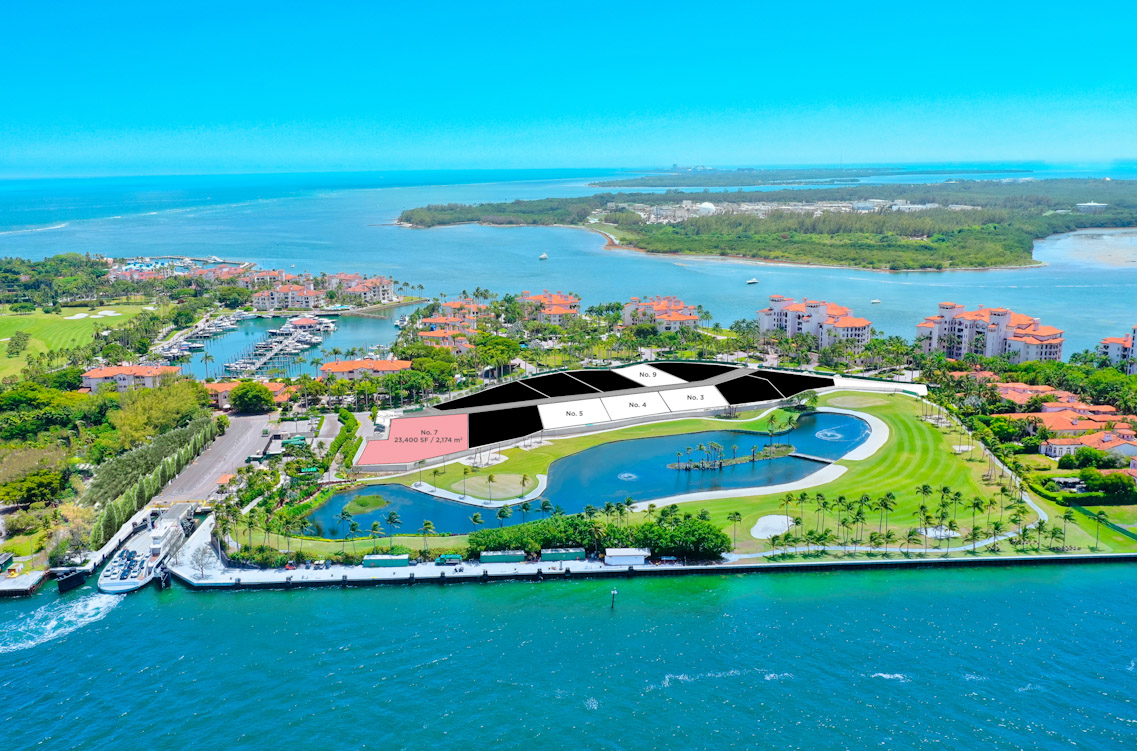
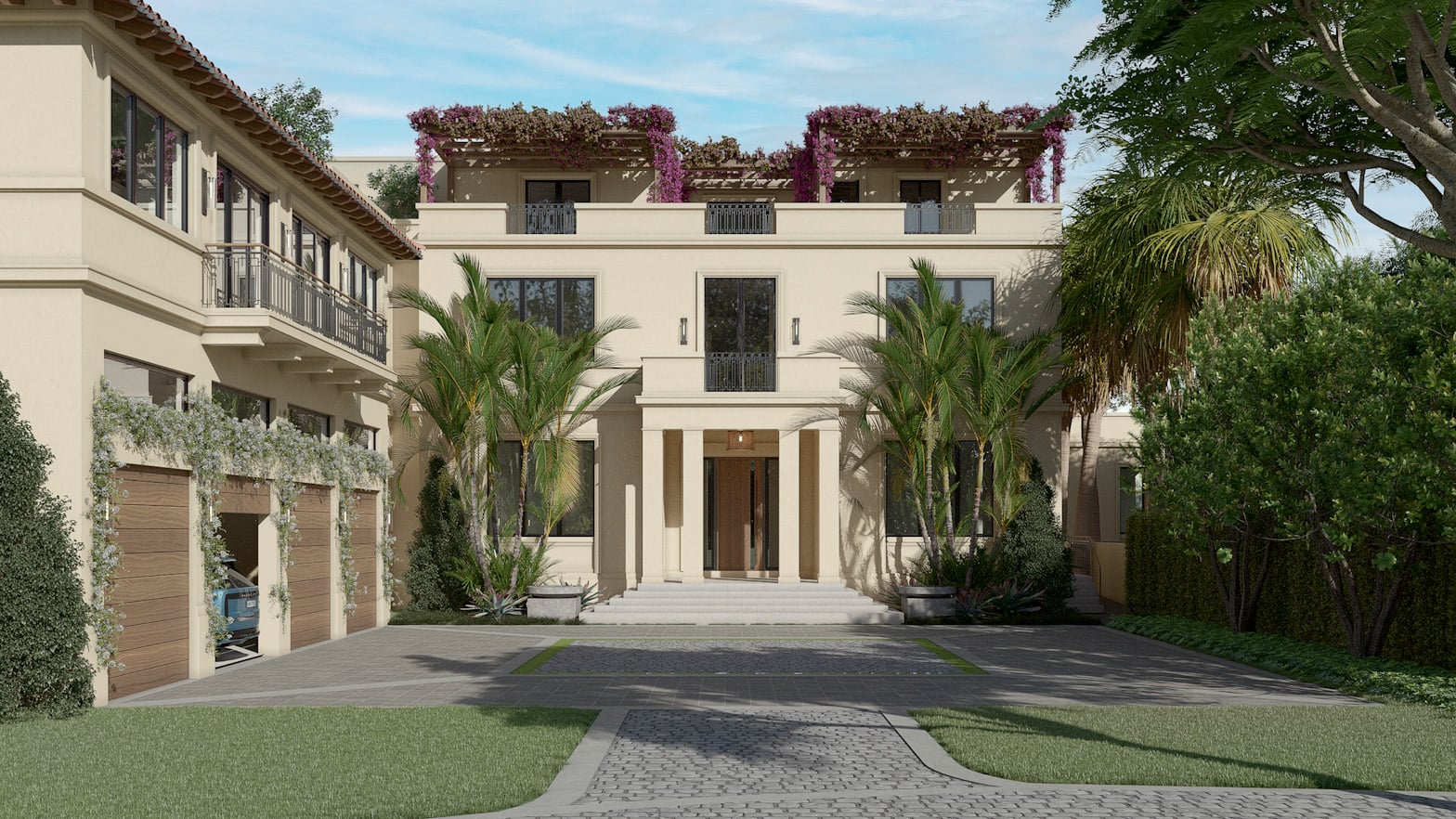
Luxury interior at The Mansions on Fisher Island Miami - marble wet bar showcasing ultra-luxury lifestyle for high-net-worth buyers
Interior of Mansion No. 7 on Fisher Island. The HRP development would have added ultra-luxury inventory at this caliber to the island.

For context, comparable new developments in the Miami luxury market include:

A Fisher Island development at this scale would likely have commanded prices at or above these benchmarks, given the island’s unmatched exclusivity. Whether that project ever materializes now depends entirely on the outcome of the eminent domain proceedings.

Buyer’s Checklist: What to Ask Before Buying on Fisher Island

Grand exterior of Fisher Island Miami luxury mansion - buyers in 2026 should add eminent domain due diligence to their checklist
Fisher Island mansion exterior. Buyers considering the island in 2026 need thorough due diligence on the fuel depot situation.

If you are considering a purchase on Fisher Island in 2026, the fuel depot situation adds a layer of due diligence to an already complex buying process. Here is what savvy buyers and their advisors should be asking:

  1. What is the current status of the eminent domain proceedings? Get a legal briefing on the timeline and likely outcomes
  2. How close is the property to the fuel depot site? Units on the southern end of the island are most directly affected
  3. What are the environmental assessment results? Request any Phase I or Phase II environmental reports for the fuel depot parcel
  4. How has the community association responded? Review the association’s legal filings and financial reserves dedicated to this fight
  5. What does your insurance broker say? Proximity to a fuel storage facility could affect coverage and premiums
  6. What is the long-term development scenario? Understand both outcomes — the site becomes luxury condos, or the fuel depot remains

Working with an advisor who understands the nuances of Fisher Island and the broader Miami Beach luxury condo market is essential in this environment. The difference between a well-timed purchase and a costly mistake often comes down to having the right intelligence before you commit.

Miami’s Luxury Market Context: Why This Matters Beyond Fisher Island

The Fisher Island situation is playing out against a backdrop of significant activity across Miami’s luxury real estate market in 2026:

  • Viceroy Brickell opened its doors — the world’s first standalone Viceroy-branded residential tower, developed by Related Group and GTIS Partners, received its TCO and welcomed first residents in May 2026. The 45-story, 420-unit tower was designed by Arquitectonica with interiors by Meyer Davis Studio
  • Mandarin Oriental Brickell Key — Swire Properties imploded the former hotel in April 2026, clearing the way for a $1 billion-plus, two-tower ultra-luxury development that has already recorded $1.3 billion in sales, including two $49.9 million penthouses
  • Market-wide pricing — Miami’s median home sale price reached $595,000 in June 2026, with luxury condos seeing median list prices of $500,000, up from $465,000 a year ago. Homes are taking 87 days to sell on average, giving buyers more negotiating room
  • New inventory arriving — Developments like EDITION Residences Edgewater, The Perigon, and St. Regis Brickell are expanding the branded luxury pipeline

The newest listings across Miami reflect a market that is active, well-supplied, and increasingly favorable for informed buyers who do their homework. Fisher Island remains a trophy asset — but like all trophy assets, it demands careful analysis in the current environment.

The Bottom Line for Luxury Buyers

The Fisher Island fuel depot battle is a reminder that even the most exclusive addresses are not immune to external forces. For buyers, the key takeaway is this: do not let the prestige of a location substitute for thorough due diligence. The eminent domain proceedings will take time to resolve, and the outcome will meaningfully shape Fisher Island’s development trajectory for the next decade.

Whether you are looking at Fisher Island specifically or exploring other South Beach, Miami Beach, or Brickell opportunities, having an advisor who tracks these developments daily is the difference between buying smart and buying blind.

David Nguah Group luxury real estate logo
Douglas Elliman Real Estate logo
David Nguah
Luxury Real Estate Advisor
Navigating Fisher Island requires local insight and off-market access. Happy to share what I’m seeing.
(786) 200-3966

Frequently Asked Questions

What is the Fisher Island fuel depot eminent domain case about?

Miami-Dade County is pursuing eminent domain to acquire a 9.6-acre fuel depot site on Fisher Island. The site was purchased by HRP Group for $180 million in October 2025 with plans to build luxury condominiums. The county wants the site for port fueling operations, and the Fisher Island community is fighting to stop the acquisition through litigation.

Will the Fisher Island eminent domain fight affect property values?

The proceedings introduce uncertainty, particularly for properties near the southern end of the island closest to the fuel depot. However, Fisher Island’s overall market fundamentals — exclusivity, limited inventory, world-class amenities — remain strong. Properties farther from the site may see minimal impact.

Is Fisher Island still a good investment in 2026?

Fisher Island remains one of America’s most exclusive residential addresses with consistently strong property values. However, the fuel depot situation adds a new variable that buyers should evaluate carefully. Working with a knowledgeable luxury real estate advisor who can provide current intelligence on the legal proceedings is essential.

What luxury condo developments are opening in Miami in 2026?

Major 2026 milestones include Viceroy Brickell welcoming its first residents, the Mandarin Oriental Brickell Key implosion clearing the way for a $1 billion-plus development, and continued sales at projects like The Perigon Miami Beach, Rivage Bal Harbour, Bentley Residences, and St. Regis Brickell.

No Comments

Miami Luxury Condo Construction Defects: What Buyers Need to Know in 2026

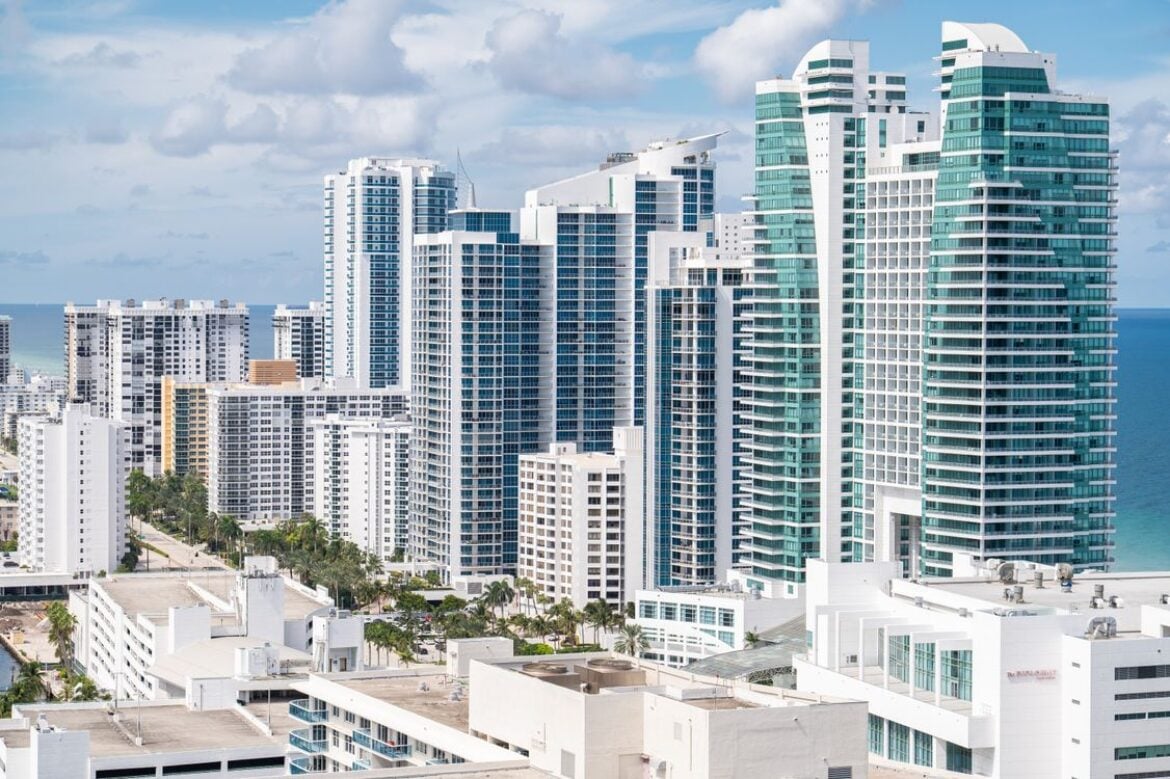
Miami luxury condo towers along the waterfront skyline where construction defect lawsuits are emerging in 2026

Miami Luxury Condo Construction Defects: What Buyers Need to Know in 2026

Miami’s luxury condo market is booming – Q2 2026 recorded 1,461 sales with average prices up 14.5% year-over-year. But behind the gleaming facades of some of the city’s most prestigious branded residences, a troubling pattern is emerging. In the first five months of 2026 alone, condo associations at three newly built luxury towers have filed lawsuits against their developers, alleging everything from cracked concrete and water intrusion to missing amenities and defective fire safety systems. These Miami condo construction defects have sent shockwaves through the luxury real estate market.

For high-net-worth buyers considering a Miami luxury condo purchase, these lawsuits are a wake-up call. Here’s what you need to know about the Miami condo construction defects wave, which buildings are affected, and how to protect yourself before signing on the dotted line.

In This Article

Miami Condo Construction Defects in 2026: Which Buildings Are Affected?

Three high-profile branded luxury towers in Miami are now embroiled in construction defect litigation, each alleging serious structural and design failures that have shocked residents who paid millions for their units.

Aston Martin Residences – Downtown Miami

The world’s first Aston Martin-branded residential tower, a 66-story, $1 billion development at 300 Biscayne Boulevard Way, faces two separate lawsuits filed within ten weeks of each other. The first, filed in February 2026, alleges fraud, self-dealing, and the omission of promised amenities including a marina and helipad. The second, filed April 15 under Florida Statute 558, targets an affiliate of G&G Business Developments, general contractor Coastal Construction, Revuelta Architecture International, and approximately a dozen subcontractors.

The defects alleged are extensive: cracked concrete on balconies, exposed post-tension tendons, waterproofing failures, seawall cracks and corrosion, elevator defects, fire system leaks, pool and spa waterproofing failures, a drooping balcony, loose fire sprinkler joints, and water intrusion throughout the building. The association is seeking at least $750,000 in damages and court-ordered repairs.

Missoni Baia – Edgewater

The 60-story, 249-unit Missoni Baia tower in Edgewater is facing a lawsuit filed January 30, 2026, by the 700 Edgewater Condominium Association in Miami-Dade Circuit Court. The complaint names OKO Group, design firms Asymptote and Revuelta, general contractor Civic Construction, and 19 subcontractors.

The association’s complaint lists a staggering 76 alleged construction and design defects, including cracks in floor slabs, foundations, and columns; water intrusion in units, stairwells, and the parking garage; defective fire-alarm devices and sprinklers; leaks in pool plumbing; portions of the tower lacking hot water; and non-functioning elevators. For a building where units sold from $600,000 to over $4 million, these allegations are deeply concerning.

Amrit Ocean Resort – Singer Island

The Amrit Ocean Resort & Residences, a wellness-focused luxury development on Singer Island, has also joined the wave of litigation. While details are still emerging, the condo association has filed suit after completing the mandatory Chapter 558 pre-suit process, alleging construction defects similar in nature to those at the other two towers.

Modern Miami condo buildings where construction defect inspections are now critical for buyers
Buyers considering Miami condos in 2026 should prioritize independent construction inspections before closing.

Why Are Miami Condo Construction Defects Happening Now?

Miami’s construction defect wave didn’t happen in a vacuum. Several factors converged to create what insurance experts are calling “ground zero” for construction litigation in the United States.

The pandemic-era building boom. Between 2020 and 2024, developers raced to meet explosive demand from buyers fleeing high-tax states like New York and California for Miami. This urgency led to compressed construction timelines, labor shortages, and in some cases, the use of cheaper materials than originally specified.

Supply chain disruptions. COVID-era supply chain issues forced builders to substitute materials and scramble for available subcontractors, sometimes compromising quality control standards that luxury buyers expect.

Florida’s statute of limitations. Under Florida law, condo associations have a limited window to identify and file claims for construction defects – typically within 10 years of substantial completion. As pandemic-era towers complete their turnover to resident-controlled boards, these boards are hiring engineers to inspect their buildings and discovering problems that were previously hidden or ignored.

Post-Surfside scrutiny. The tragic collapse of Champlain Towers South in 2021 fundamentally changed how Florida approaches building safety. New legislation requires more rigorous inspections, and condo boards are taking their oversight responsibilities far more seriously.

How Miami Condo Construction Defects Affect Insurance and Property Values

Miami condo construction defects and lawsuits don’t just affect the buildings named in the complaints. According to Bisnow, these lawsuits are driving up liability insurance costs across the entire South Florida development industry. Insurance experts predict the litigation will “continue to spike for the next several years,” creating a ripple effect that touches every new project in the pipeline.

For current owners in affected buildings, the consequences are immediate: special assessments to fund litigation, uncertainty about property values during ongoing lawsuits, and the inconvenience of living through repairs. For prospective buyers, these cases underscore the importance of thorough due diligence before purchasing in any new development condo.

Miami luxury highrise condo with balconies — a building type facing rising insurance costs from construction defects
Balcony and facade defects are among the most common construction issues driving insurance costs higher in Miami luxury condos.

Protecting Yourself from Miami Condo Construction Defects: A Buyer’s Due Diligence Checklist

The construction defect wave doesn’t mean you should avoid Miami luxury condos – the market fundamentals remain strong, with inventory tightening and prices appreciating across premium neighborhoods. But it does mean buyers should be more strategic than ever. Here’s what smart buyers are doing:

1. Research the developer’s track record. Look beyond the brand name on the building. Who is the actual developer? What other projects have they completed? Have any of their previous buildings faced litigation? A name like Aston Martin or Missoni on the facade doesn’t guarantee the construction quality matches the brand’s reputation – the automobile or fashion company typically licenses its name but doesn’t oversee construction.

2. Review the general contractor. The general contractor is the entity responsible for day-to-day construction quality. Research their history, safety record, and whether they’ve been involved in previous defect claims.

3. Hire an independent inspector. Before closing on a new construction unit, hire your own licensed engineer or inspector to conduct a thorough walkthrough. Don’t rely solely on the developer’s punch list process.

4. Read the condo documents carefully. Pay close attention to the declaration of condominium, the developer’s warranty provisions, and any arbitration clauses that might limit your legal options. A qualified real estate attorney is essential for this review.

5. Check the building’s reserve study and insurance. For existing buildings, request the most recent reserve study and insurance documentation. Underfunded reserves or unusually high insurance premiums can be red flags.

6. Work with an experienced luxury real estate advisor. An advisor who specializes in Miami’s luxury market can provide insights into developer reputations, building quality, and potential risks that you won’t find in marketing brochures. Contact David Nguah at Douglas Elliman for expert guidance on navigating Miami’s luxury condo market.

Close-up of a modern Miami condo facade highlighting construction quality concerns in 2026
Facade quality and waterproofing are at the center of multiple Miami condo construction defect lawsuits in 2026.

Which Miami Luxury Condos Are Getting It Right?

While the headlines focus on problematic buildings, it’s important to recognize that many Miami luxury developments are delivering exceptional quality. Buildings with established developer track records and top-tier general contractors continue to set the standard for luxury living.

Developments like The Perigon Miami Beach, which topped off in March 2026, and St. Regis Brickell are being developed by teams with deep experience in ultra-luxury construction. Baccarat Residences Miami and Rivage Bal Harbour have also attracted buyers who value proven quality over flashy branding.

The key differentiator? Developer experience and reputation. Buyers who focus on the people behind the project rather than the logo on the building tend to fare better in the long run. Buildings on Fisher Island, in South Beach, and along the Miami Beach waterfront continue to command premium prices because of consistent construction quality and established management.

What This Means for Miami’s Luxury Market Going Forward

Despite the litigation, Miami’s luxury real estate market shows no signs of slowing. Q2 2026 data confirms average prices are up 14.5% year-over-year, and the ultra-luxury segment ($10M+) is on pace for nearly 430 transactions by year’s end. Miami’s most expensive properties continue to attract global wealth.

The construction defect wave may actually strengthen the market in the long run by raising quality standards across the industry. Developers who cut corners will face consequences, and buyers are becoming more sophisticated about evaluating what they’re purchasing. Despite these Miami condo construction defects, the branded residences trend isn’t going away – but the expectation of accountability is growing.

For buyers considering Miami penthouses or luxury condos in Brickell, Miami Beach, or Bal Harbour, the message is clear: do your homework, work with an experienced advisor, and don’t let a famous brand name substitute for genuine due diligence.

Frequently Asked Questions About Miami Condo Construction Defects

Which Miami luxury condos have construction defect lawsuits in 2026?

Three major Miami luxury condo towers are currently facing construction defect lawsuits: Aston Martin Residences in Downtown Miami (66 stories, filed February 2026), Missoni Baia in Edgewater (60 stories, 76 alleged defects, filed January 2026), and Amrit Ocean Resort on Singer Island. All three lawsuits allege issues including cracked concrete, water intrusion, and defective fire safety systems.

How can I protect myself when buying a Miami luxury condo?

Smart buyers follow a six-step due diligence checklist: research the developer’s track record beyond the brand name, investigate the general contractor’s history, hire an independent licensed engineer for a pre-closing inspection, have a real estate attorney review all condo documents, check the building’s reserve study and insurance documentation, and work with an experienced luxury real estate advisor who knows developer reputations firsthand.

Do construction defect lawsuits affect Miami condo property values?

Yes. Buildings involved in active litigation often face special assessments, uncertainty about property values, and rising liability insurance premiums. However, the broader Miami luxury market remains strong — Q2 2026 shows prices up 14.5% year-over-year. The impact is concentrated on the specific buildings named in lawsuits, not the market as a whole.

Contact David Nguah – Your Miami Luxury Real Estate Advisor

Navigating Miami’s luxury condo market requires more than browsing listings – it requires an advisor who understands developer reputations, construction quality, and the nuances that separate a great investment from a costly mistake. David Nguah at Douglas Elliman brings deep market expertise and a commitment to protecting his clients’ interests.

Whether you’re buying your first Miami luxury condo or adding to your portfolio, David provides the insight and guidance you need to make confident decisions. Contact David Nguah at (786) 200-3966 or info@miamisrealestate.com for a confidential consultation.

David Nguah GroupDouglas Elliman Real Estate
David Nguah · Luxury Real Estate Advisor
Douglas Elliman Real Estate
© 2026 David Nguah Group · Douglas Elliman Real Estate