
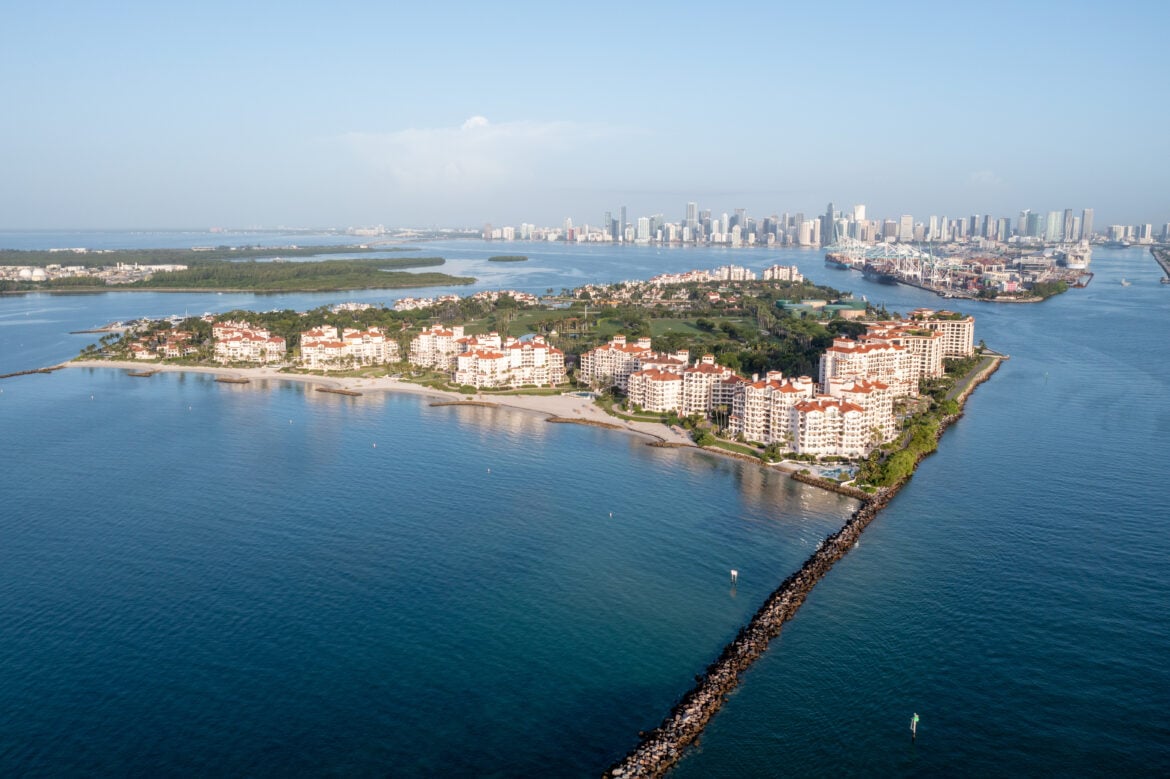
Fisher Island — the ultra-exclusive enclave accessible only by ferry, where the average household income exceeds $2 million — is now at the center of one of South Florida’s most consequential real estate battles. On June 16, 2026, Miami-Dade County commissioners voted to pursue eminent domain proceedings to acquire a 9.6-acre fuel depot site on Fisher Island, escalating a months-long dispute that has drawn in billionaire residents, powerful developers, and county officials.
For luxury buyers considering Fisher Island or the broader Miami waterfront market, this fight carries real implications for property values, development timelines, and the future character of one of America’s wealthiest zip codes. Here is what you need to know.
In This Article
- What Happened: The $400M Land Deal That Fell Apart
- Miami-Dade’s Eminent Domain Move
- How This Affects Fisher Island Property Values
- The Luxury Condo Development That Hangs in the Balance
- Buyer’s Checklist: What to Ask Before Buying on Fisher Island
- Miami’s Luxury Market Context: Why This Matters Beyond Fisher Island
What Happened: The $400M Land Deal That Fell Apart
In October 2025, Chicago-based HRP Group purchased a 9.6-acre fuel depot on Fisher Island for $180 million. The site, located at the southern tip of the island, had served as a fueling station for PortMiami vessels for decades. When HRP acquired the property, they simultaneously signed two agreements with the Fisher Island community:
- A development agreement committing HRP to demolish the fuel depot, remediate the land, and build luxury condominiums on the site
- An option agreement requiring HRP to convey approximately 4 acres to the Fisher Island Community Association for community use
Fisher Island residents celebrated the deal. After years of living adjacent to an aging fuel storage facility — with its environmental risks and industrial character — the promise of a remediated site and new luxury residences seemed like a win for everyone.
But in early 2026, the deal began to unravel. Reports emerged that HRP had been in quiet negotiations with Miami-Dade County over a seven-month period to sell the entire property to the county for a staggering $400 million — $200 million at closing, plus another $200 million over 20 years. The county wanted the site to relocate its port fueling operations, which would mean the fuel depot would remain — not be demolished as promised.
Miami-Dade’s Eminent Domain Move
When the proposed $400 million deal collapsed under public scrutiny, Miami-Dade did not back down. On June 16, 2026, county commissioners voted to pursue acquiring the Fisher Island fuel depot site through eminent domain — the government’s power to take private property for public use with compensation.
The Fisher Island Community Association and the Fisher Island Club have both filed lawsuits to block the county’s actions. Their legal arguments center on several points:
- The fuel depot poses safety risks to the approximately 800 families living on Fisher Island
- HRP’s original development agreement should be honored
- The county’s interest in the property is driven by a desire to avoid more expensive alternatives for port fueling infrastructure
According to The Real Deal, the community association’s lawsuit described the fuel depot as creating “perpetual danger” for Fisher Island families. The legal battle is expected to be protracted, with implications that could stretch well into 2027.
How This Affects Fisher Island Property Values
Fisher Island has long been one of the most expensive residential addresses in the United States. Current listings on Fisher Island range from $3 million condominiums to $50 million-plus estates. The median sale price has consistently exceeded $5 million in recent years.
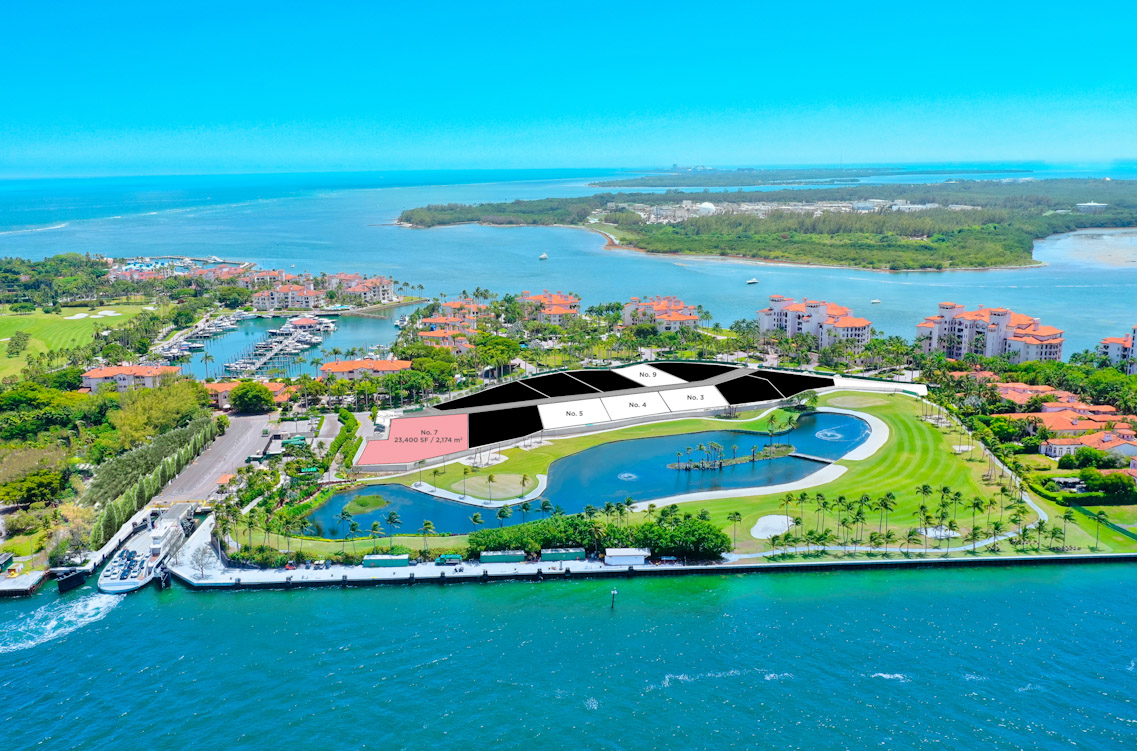
The eminent domain battle introduces uncertainty into this market in several ways:
- Environmental concerns: If the fuel depot remains operational, buyers must factor in proximity to an industrial fuel storage facility, environmental liability exposure, and potential impacts on insurance premiums
- Development potential lost: The HRP development plan would have added ultra-luxury inventory to Fisher Island — potentially driving up comparable values across the island. Without it, the island’s development pipeline shrinks
- Legal uncertainty: Eminent domain proceedings can take years. During that time, the 9.6-acre site sits in limbo — neither developed nor remediated
- Buyer confidence: High-net-worth buyers value stability and predictability. An active government land-seizure proceeding on the island introduces a variable that sophisticated buyers will want to understand before committing
That said, Fisher Island’s fundamentals remain strong. The island’s exclusivity, limited inventory, and world-class amenities continue to attract ultra-high-net-worth buyers from around the globe. Existing properties far from the fuel depot site may see minimal impact, while units closer to the southern tip could face more scrutiny from buyers and their advisors.
The Luxury Condo Development That Hangs in the Balance
HRP Group’s original plan for the fuel depot site called for a two-building luxury condominium complex with community amenities. While detailed pricing and unit counts have not been publicly released, the scale of the project — 9.6 acres on Fisher Island — would have made it one of the most significant new development opportunities in Miami’s luxury preconstruction market.

For context, comparable new developments in the Miami luxury market include:
- The Perigon Miami Beach — 73 oceanfront residences starting above $4 million
- Rivage Bal Harbour — 60 residences by Related Group starting above $5 million
- Bentley Residences Sunny Isles — the world’s first Bentley-branded tower with car elevators
- The Residences at Mandarin Oriental, Brickell Key — which recorded two penthouses at $49.9 million each after the April 2026 implosion of the former hotel
A Fisher Island development at this scale would likely have commanded prices at or above these benchmarks, given the island’s unmatched exclusivity. Whether that project ever materializes now depends entirely on the outcome of the eminent domain proceedings.
Buyer’s Checklist: What to Ask Before Buying on Fisher Island

If you are considering a purchase on Fisher Island in 2026, the fuel depot situation adds a layer of due diligence to an already complex buying process. Here is what savvy buyers and their advisors should be asking:
- What is the current status of the eminent domain proceedings? Get a legal briefing on the timeline and likely outcomes
- How close is the property to the fuel depot site? Units on the southern end of the island are most directly affected
- What are the environmental assessment results? Request any Phase I or Phase II environmental reports for the fuel depot parcel
- How has the community association responded? Review the association’s legal filings and financial reserves dedicated to this fight
- What does your insurance broker say? Proximity to a fuel storage facility could affect coverage and premiums
- What is the long-term development scenario? Understand both outcomes — the site becomes luxury condos, or the fuel depot remains
Working with an advisor who understands the nuances of Fisher Island and the broader Miami Beach luxury condo market is essential in this environment. The difference between a well-timed purchase and a costly mistake often comes down to having the right intelligence before you commit.
Miami’s Luxury Market Context: Why This Matters Beyond Fisher Island
The Fisher Island situation is playing out against a backdrop of significant activity across Miami’s luxury real estate market in 2026:
- Viceroy Brickell opened its doors — the world’s first standalone Viceroy-branded residential tower, developed by Related Group and GTIS Partners, received its TCO and welcomed first residents in May 2026. The 45-story, 420-unit tower was designed by Arquitectonica with interiors by Meyer Davis Studio
- Mandarin Oriental Brickell Key — Swire Properties imploded the former hotel in April 2026, clearing the way for a $1 billion-plus, two-tower ultra-luxury development that has already recorded $1.3 billion in sales, including two $49.9 million penthouses
- Market-wide pricing — Miami’s median home sale price reached $595,000 in June 2026, with luxury condos seeing median list prices of $500,000, up from $465,000 a year ago. Homes are taking 87 days to sell on average, giving buyers more negotiating room
- New inventory arriving — Developments like EDITION Residences Edgewater, The Perigon, and St. Regis Brickell are expanding the branded luxury pipeline
The newest listings across Miami reflect a market that is active, well-supplied, and increasingly favorable for informed buyers who do their homework. Fisher Island remains a trophy asset — but like all trophy assets, it demands careful analysis in the current environment.
The Bottom Line for Luxury Buyers
The Fisher Island fuel depot battle is a reminder that even the most exclusive addresses are not immune to external forces. For buyers, the key takeaway is this: do not let the prestige of a location substitute for thorough due diligence. The eminent domain proceedings will take time to resolve, and the outcome will meaningfully shape Fisher Island’s development trajectory for the next decade.
Whether you are looking at Fisher Island specifically or exploring other South Beach, Miami Beach, or Brickell opportunities, having an advisor who tracks these developments daily is the difference between buying smart and buying blind.


Frequently Asked Questions
What is the Fisher Island fuel depot eminent domain case about?
Miami-Dade County is pursuing eminent domain to acquire a 9.6-acre fuel depot site on Fisher Island. The site was purchased by HRP Group for $180 million in October 2025 with plans to build luxury condominiums. The county wants the site for port fueling operations, and the Fisher Island community is fighting to stop the acquisition through litigation.
Will the Fisher Island eminent domain fight affect property values?
The proceedings introduce uncertainty, particularly for properties near the southern end of the island closest to the fuel depot. However, Fisher Island’s overall market fundamentals — exclusivity, limited inventory, world-class amenities — remain strong. Properties farther from the site may see minimal impact.
Is Fisher Island still a good investment in 2026?
Fisher Island remains one of America’s most exclusive residential addresses with consistently strong property values. However, the fuel depot situation adds a new variable that buyers should evaluate carefully. Working with a knowledgeable luxury real estate advisor who can provide current intelligence on the legal proceedings is essential.
What luxury condo developments are opening in Miami in 2026?
Major 2026 milestones include Viceroy Brickell welcoming its first residents, the Mandarin Oriental Brickell Key implosion clearing the way for a $1 billion-plus development, and continued sales at projects like The Perigon Miami Beach, Rivage Bal Harbour, Bentley Residences, and St. Regis Brickell.